
Daily Devotions
New devotions are posted Monday, Wednesday, and Friday.
Miracle
Today’s author is Prince of Peace member, Debbie Jorgens.
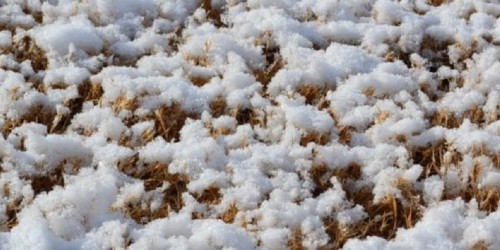
When the layer of dew lifted, there on the surface of the wilderness was a fine flaky substance, as fine as frost on the ground. When the Israelites saw it, they said to one another, “What is it?” For they did not know what it was. – Exodus 16:14-15
I admire people who are adventurous enough to try all kinds of foods that they have never before eaten. I am not one of those people. It isn’t that I won’t attempt anything new but in general, whether or not I am willing to try it depends on the answer to my question: “What is it?” When it comes to food, at least, I prefer to play it safe and stick with what I know.
The Israelites have barely begun their wilderness journey when they complain about the lack of food. In response, God says to Moses, “I am going to rain bread from heaven for you” (16:4). Bread from heaven! Now that has a nice ring to it! I love bread! But as it turns out, the bread that falls from heaven looks nothing like a loaf of rustic Italian boule or dutchy crust Vienna or a mouth-watering French baguette!
Apparently it didn’t look like bread to the Israelites, either, because as soon as they saw the flaky substance covering the ground they asked, “Man hu?” (The Hebrew phrase translates to “What is it?” and is the origin of the word, “manna.”) Moses responds, “It is the bread that the Lord has given you to eat.” And so, whether out of sheer hunger or because they trusted that any bread coming from the Lord would surely be good, the people ate it.
Manna can still be found on the Sinai Peninsula today. The flakes themselves come from plant lice that feed on the local tamarisk trees. The lice excrete a yellow-ish white flake or ball. Rich in carbohydrates and sugars, it is gathered by the Bedouin people and baked into bread.
In her book, “Bread of Angels,” Barbara Brown Taylor writes that some people reject the correlation of this natural phenomenon in the Sinai Peninsula and the bread that God provided to the Israelites in the wilderness because they think it takes away from the miracle of manna. She writes:
…but I wonder about that. Does manna have to come out of nowhere in order to qualify as a miracle? Or is the miracle that God heard the complaining of hungry people and fed them with bug juice – with food it would never have occurred to them to eat? Or to put it another way, what makes something bread from heaven? Is it the thing itself or the one who sends it?
Faithful God, you are the giver of all good gifts. Thank you for hearing us – even our complaining – and for providing us with all that we need. Amen.
Previously…
Caring with Compassion
On Sunday, we’ll again encounter the story of the Gerasene demoniac, a man possessed by numerous demons who lived among the tombs, isolated and tormented. When Jesus arrives, he doesn’t turn away in fear or judgment. Instead, he approaches with compassion and offers healing. This story teaches us profound lessons about the importance of caring for those who are suffering, especially in matters of mental health.
Enough Love to Go Around
The reading from Sunday is one of the most well-read chapters in the Bible. In a way, it’s God’s word in a nutshell. But how do we live it? How do we let it sink in?
Sunflower
In the portrait of creation, the sunflower stands tall, a radiant emblem of faith and resilience. Its journey mirrors our own pilgrimage through life’s trials and triumphs, echoing the resurrection story that infuses hope into every soul. Just as the sunflower turns its face toward the sun, unwavering in its pursuit of light and warmth, so too should we fix our gaze upon the Son, our source of life and renewal.
Spring in the Church
As spring breathes new life into the world, we witness the meticulous preparation of gardens. Our Karen neighbors are eagerly assembling their supplies and bringing their plots out of their winter slumbers. Seeds are sown, soil is cultivated, and roots begin to take hold. In these moments of anticipation, we can see the parallels between the nurturing of a garden and the formation of the early Christian church.