Daily Devotions
New devotions are posted Monday, Wednesday, and Friday.
Kingship or Kinship?
Today’s author is Prince of Peace member, Carol Swanson.
It’s one of those interesting coincidences: Last Saturday, in every state, D.C., U.S. Territories, Canada, and western Europe, millions of people (one estimate: 7 million) took part in No Kings rallies and protests. And on Sunday we heard about David being chosen by God to be the next king of Israel. Pastor Steve reminded us that originally, when the people of Israel asked Samuel for a king, he was surprised that God said OK, let them have their king. When you read 1 Samuel 8 about the first ask, you also see that God saw this as a rejection of God’s kingship. And Samuel spoke God’s warning of what kings are like: “…he will take….he will take…he will take…he will take… And in that day you will cry out because of your king, whom you have chosen for yourselves.” But they could have a king.
Saul as first king didn’t work out very well, and God said it would be God’s choice the second time: David. Solomon started out asking for wisdom but then became interested in power and wealth. The footnote in my Bible suggests the editors of the books of Samuel had Solomon in mind when they wrote 1 Samuel 8’s warning.
In biblical times, the people were limited on metaphors for God as Ruler to be obeyed. As nations developed they only knew of pharaohs, kings, and emperors—all with unlimited power, it seemed. And that became one of the metaphors for God, King of the Universe.
What other possible metaphors could we use that are meaningful?
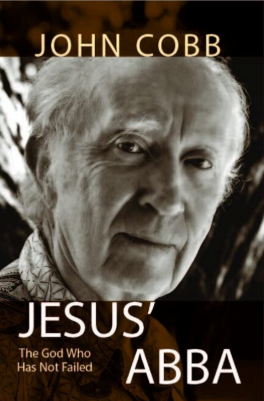
Process writer John Cobb opened the first chapter of his book Jesus’ Abba with these words: “In the Bible we find two major images of God, one, monarchical, and the other, familial. In the Hebrew Scriptures, God is most often imaged as ‘King’; “whereas in the New Testament “Father’ is dominant. … In the New Testament Jesus is never depicted as addressing God as King…. He always spoke to and of his, or our, Father. Nevertheless…we are told that his central message was a call to repentance because the ‘kingdom of God’ is at hand. It is all too natural to move from the idea of God has a kingdom to the idea that we should image God as King.” (pp1-2)
John Cobb suggests commonwealth as an alternative. He writes, “When we consider how Jesus talked about God, the answer that it would be managed for the sake of all who lived there with special needs for the weak and the needy. …. Jesus’ message is that the ‘divine commonwealth is at hand.’ … There is no reason to think of God…as a monarch!” (p 2)
Cobb explains that Aramaic was the language Jesus spoke and prayed in, and the Aramaic word for father was abba. It is rooted in sounds that babies first make. “Jesus spoke to God as ‘Abba’ and taught the disciples to address God in that way. … Aramaic abba was the only term for father. Jesus thought of God in a language whose earliest and primary connotations came from infancy. The normal relation of the father to the infant is one of tenderness and unconditional love. It was unconditional love rather than controlling power that dominated Jesus’ understanding of God.” (p 5)
Cobb points out that in the Greek New Testament, pater is the word for Father. But the Aramaic abba is used 3 times. In Mark 14:36, Jesus is praying to “Abba, Father,” in the garden of Gethsemane. And Paul uses it in two of his letters, Romans 8:15 and similarly in Galatians 4:6–– “And because you are children, God has sent the Spirit of his Son into our hearts, crying, ‘Abba! Father!’” (p 5-6) We are God’s family.
Last week, Women on Wednesday (WoW) had their first book discussions. I’m in the group discussing Hungry for Hope: Letters to the Church from Young Adults. Each chapter is written by paired authors, one younger one older. Rev. Kristen Glass Perez shares from her Anishinaabe background in the section called, “The Seven Grandfather Teachings Return us to the Collective.”
Kristen writes, “A powerful image stands out as I (Kristen) think of elders and youth cocreating together. It comes from my experiences of indigenous practice of making camp together. In making camp together so many things could occur…
- we had to commit to making the camp safe for everyone,
- we would learn from each other,
- we would make new relationships that could last a lifetime,
- we would do our part in serving and caring for each other,
- we would be mindful of the impact we had on one another with our words and our actions, and very importantly,
- we would practice reciprocity—showing our gratitude for what was shared and what was given.
“We would then take these experiences, new ideas, and new relationships back to our home communities and share––seeing the impact grow exponentially.
“Camps are also seasonal. Each season of camp is really important—and its tasks, stories, and rituals can often only be done in that season….The same might be said about our journey through different generational stages of life. There is a time for elders, and there is a time for youth. Neither is to be disrespected, but rather, they are to be honored as their own seasons. …
“In Anishinaabe history, the seven values or Grandfather Teachings that were gifted to the Anishinaabe are love, respect, truth, honesty, bravery, humility, and wisdom. As I live an embodied life of multiple identities, these values ground me… they challenge and teach us about what it means to be in community. As we imagine together about being church and continually make and break camp with one another—may we acknowledge new relationships, and all that we have received from each other. May we return safely home. May we be generous with our stories and share the skills and knowledge that we have gained while in camp together. May we be good stewards of the land—on whatever lands you call home. This is how we begin in camp together, in a circle, to disrupt the patterns of hyperarchy, tokenism, and colonialism.” (pp 51-53)
You may also wonder about mother metaphors for God. God is never addressed at mother in the Bible, but there are verses that rely on motherly care similes to show God’s nurturing and compassion. Deuteronomy 32:11–12, 18. Isaiah 42:14. Isaiah 49:15. Isaiah 66:13. Hosea 11:3-4. Hosea 13:8. Psalm 131:2.
Jesus’ Abba and Hungry for Hope are both in the PoP library.
Previously…
Freedom For (not just From)
I promise you, it’s a coincidence that just after our country celebrated it independence, our church happened to take on the theme “Created to Be Free.” Who would have thought that the concept of “freedom” would come to carry the amount of cultural and political baggage as it does today? But, as God’s faithful, it would truly be a shame if we confused, let alone ceded, the very definition of living free in God’s world.
Independence Daze
On the heels of Independence Day, we shift to consider what it means to be created free, not just the privilege of living that way. On Sunday, we’ll read from Romans 12, where Paul urges us not to conform to the patterns of this world but to be transformed by the renewing of our minds. This transformation allows us to discern and live out God’s vision for the world as we have been made good, pleasing, and perfect.
Created to be Authentic
To be authentic to me means to be pure and real. With inanimate objects, there are certain qualities that is has to have to be authentic. But with people, I believe that the only person than can tell you how to be your authentic self is yourself.
This Little Light of Mine
This past April 7th, my sister and I drove from the Twin Cities to Decatur, Illinois, where we would spend the night before driving three hours south to our final destination: Carbondale! Under normal circumstances, Carbondale, Illinois, wouldn’t have been on either of our bucket lists. But something truly AMAZING was about to take place – a total solar eclipse – and Carbondale was in the path of totality!