Today’s author is Prince of Peace Intentional Interim, Pr. Steve Sylvester.
A good friend of mine regularly tunes his TV to international track meets. He started this to fill in the time between cycling grand tours, but he very quickly found himself captivated by a few athletes that he continued to follow. Above all others in his list is Femke Bol, a middle-distance runner from the Netherlands. About a year-and-a-half ago, he sent the following text to me: “Femke Bol just ran an insane anchor leg and the Netherlands won the mixed 4 x 400 meters relay. She is amazing!” It took only a few clicks to find the race, and I was hooked. For those who would like to see what he was raving about:
I have since watched several of Femke Bol’s races. What really stands out is the seeming effortless grace with which she runs, even when she is at the limit pushing to reel in runners in front of her, although I know that underneath the smoothness is absolute economy of motion and mental discipline. The sheer relentlessness of her kick in the final 150 meters or so is particularly stunning. Most magical are her anchor legs in relay races, because no matter how far back she is when she is given the baton, one has the feeling that she will overtake whoever stands between her and the finish line.
In our men’s Bible Study last Tuesday, we read and discussed the “prologue” to John’s Gospel, Chapter 1, verses 1 through 18. It was the assigned reading for December 21, and since Prince of Peace’s Lessons and Carols worship included several Scripture passages, we took on John. Familiar passages like this can be tough actually to study because we take them on believing we’ve already heard all they have to tell us. Fortunately, however, our readings are now coming from the NRSVUE (That’s the New Revised Standard Version UPDATED EDITION for the uninitiated, a translation that has been out for only a year or so), and there was indeed something new and unexpected.
Here is how the NRSV, that we are used to reading, renders John 1:5: “The light shines in the darkness, and the darkness did not overcome it.” The NRSVUE is slightly different: “The light shines in the darkness, and the darkness did not overtake it.” Just one word, as the newer edition proclaims the inability of the darkness to overtake the light. I felt drawn to the image this created in my mind of a footrace in which the finish is an accomplished fact, as one competitor inexorably outpaces the other. And here’s the other thing to note about that verse, and it’s the case in both translations: the race has been completed. The darkness DID not overtake the light.
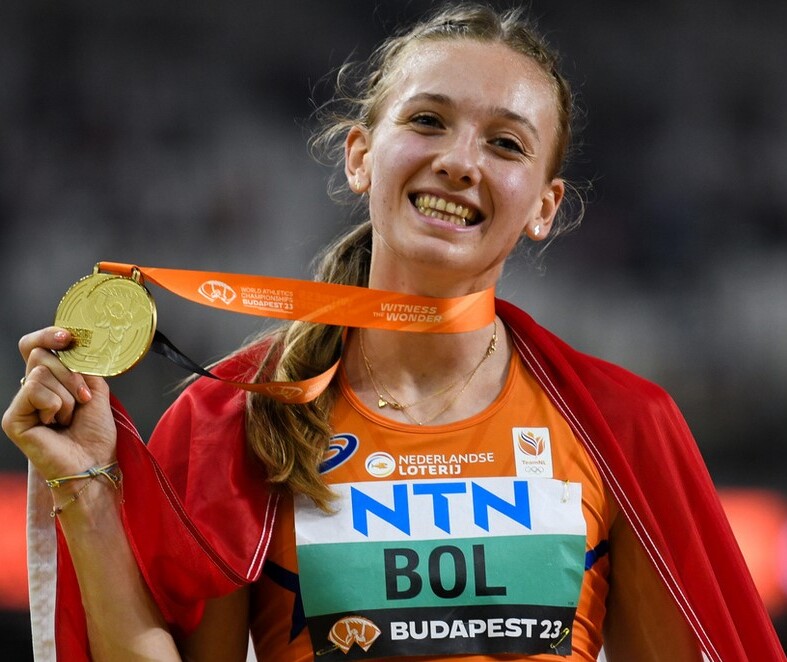
That last bit, agreed upon by both translations, is the real news of Christmas, that the finish is not in doubt, and in fact the race has already been run. At the end of Femke Bol’s races, after some she is bent over clutching her knees, in a few she is sprawled on the track, but in all of them she is suffering from having won, trying desperately to catch her breath. And everyone is celebrating, her teammates, her coaches, her fans. That is Christmas. The world is still suffering, and we are desperately trying to catch our breath, but the race has been won. Darkness did not overtake the light. This is wonderful news. Merry Christmas to all!