
Today’s author if Prince of Peace member, Carol Swanson.
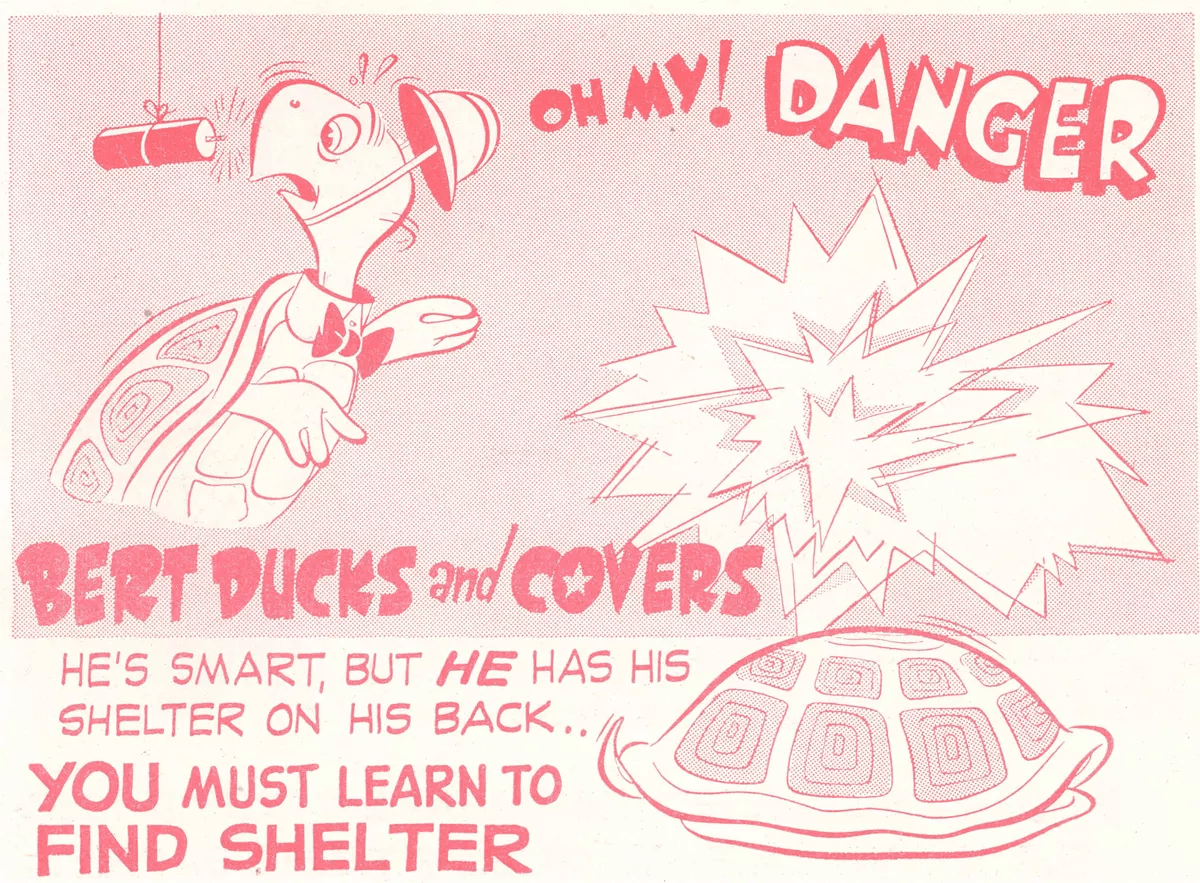
I remember as a child and teenager the talk and anxiety of nuclear war, a threat that has never really gone away. People recall practicing “duck and cover,” crawling under desks at school, as if that would have saved us. I remember my mother telling me she had asked Aunt Doris (married to an Air Force officer) about building a bomb shelter, and Aunt Doris said don’t bother, too devastating.
People like Hal Lindsey, author of The Late Great Planet Earth, (published 1970), popularized the Second Coming of Jesus and the “Rapture” which fed or relieved the anxiety. As they laid out God’s plan for the End, the Apocalypse, Armageddon, these words became part of our culture. Sit back, don’t worry. Not our responsibility. God will intervene.
As Craig Koester explains, Martin Luther at first rejected Revelation “in part from his recognition of the power to draw people into dangerous speculation about the future.” He thought it “was neither apostolic nor prophetic,” not of the Holy Spirit. And it was confusing; stay away from it. Later, he could see the events in his own time relating to Revelation. Finally, he “shifted from decoding Revelation to asking about how the book addresses readers with a message of warning and promise” (Revelation & the End of All Things, p 10-11).
In her book Facing the Apocalypse, Climate, Democracy, and Other Last Chances, Catherine Keller emphasizes that “to mind” the violent and destructive “metaphors in Revelation is to recognize that John is not predicting future facts. But he may be revealing fatal patterns. We read the images for meditation and for confrontation. Might facing the Apocalypse in its ancient intensity help us face apocalypse in our own time?” (p xiii) As it has repeatedly through the millennia?
A message of warning and promise.
In Rev. chapters 2 and 3, The seven churches that John is writing to receive warnings and promises to those who conquer. Koester organizes them as 3 challenges of faith.
1. Assimilation (wanting to compromise, to be accepted in Roman society) threatened the churches of Ephesus, Pergamum, and Thyatira.
2. Persecution (how to “be faithful until death” when you are powerless) afflicted Smyrna and Philadelphia.
3. Complacency (how to keep their faith alive when too comfortable) described Sardis and Laodicea.
Do we not still face these same challenges today? What else? In what situations? What is our “Rome”?
Certainly, climate change is daunting, multiplying critical issues. Yet we talk about the “new normal,” falling into the trap of acceptance. Keller emphasizes the importance of denormalization of the Apocalypse. We must pay attention. “That attention flows from the reading of shared nightmares, shared dreams. How else can we mind—face—the danger and help activate response—ability?” (p 18)
Eternal Spirit, Earth-maker, Pain-bearer, Life-giver,
Source of all that is and that shall be,
Father and Mother of us all,
Loving God, in whom is heaven:
The hallowing of your name echo through the universe!
The way of your justice be followed by the peoples of the world!
Your heavenly will be done by all created beings!
Your commonwealth of peace and freedom sustain our hope and come on earth.
With the bread we need for today, feed us.
In the hurts we absorb from one another, forgive us.
In times of temptation and test, strengthen us.
From trials too great to endure, spare us.
From the grip of all that is evil, free us.
For you reign in the glory of the power that is love, now and for ever.
Amen.
~ New Zealand Anglican Prayer Book