
Today’s author is Prince of Peace’s Intentional Interim, Pr. Steve Sylvester.
Forgive us our debts, as we also have forgiven our debtors. (Matthew 6:12)
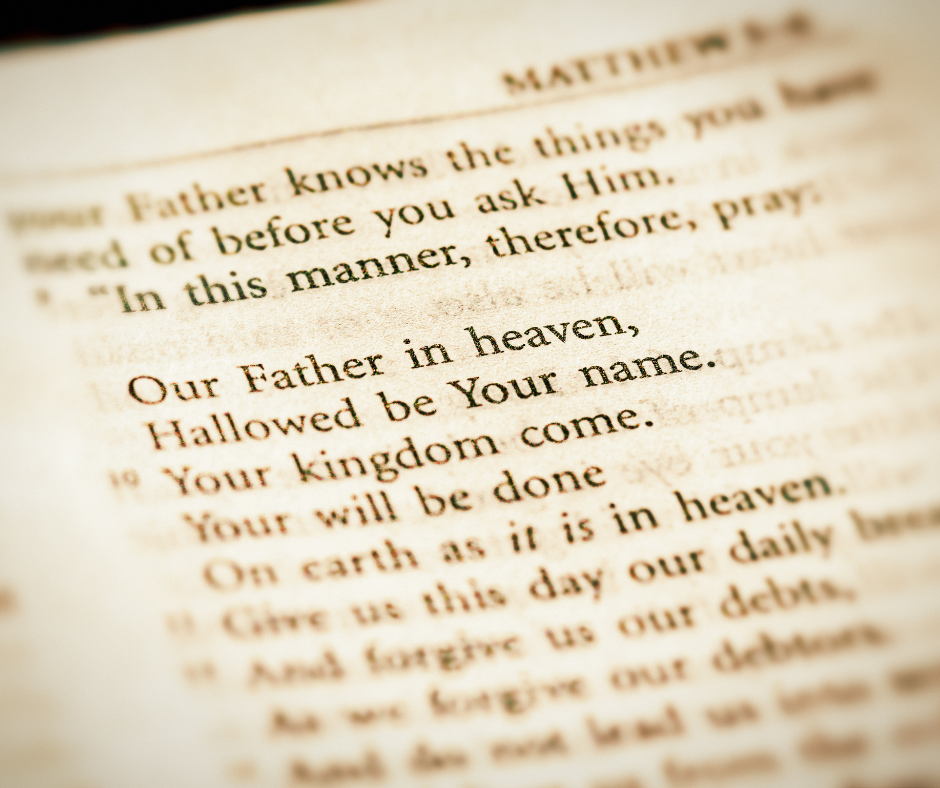
As we wrap up our series on prayer by using the acronym ACTS (prayers of Adoration, Confession, Thanksgiving and Supplication), we come to the Lord’s Prayer. In verses 7 through 13, Matthew’s sixth chapter has Jesus teaching the prayer to the crowd and his disciples as he encourages them to avoid the kind of religious showiness that was often exhibited by Jew and gentile alike. And then comes verse 14: “For if you forgive others their trespasses, your heavenly Father will also forgive you, but if you do not forgive others, neither will your Father forgive your trespasses.”
I wonder about the out-of-sequence placement of verse 14, because it appears to be a commentary on verse 12. It’s almost as if Jesus taught the prayer in its entirety, all the way through verse 13, and then decided to comment on the petition that he knew would trouble us most. And why would it trouble us? Because it appears that Jesus is making God’s forgiveness conditional upon our own willingness to forgive. And then with his verse 14 commentary, he flat out confirms what we fear: “If you forgive, God will forgive you. If you don’t forgive, God will not forgive you.”
What are we to do with that? This is a statement that flies in the face of our understanding of a God whose love and forgiveness in unmerited. My understanding of this is that Jesus is telling us that God’s expectations of us are absolute. “You MUST forgive,” God is telling us, “because I forgive you.” It hearkens back to the time when God was shaping God’s people in the wilderness after their escape from Egypt and said, “You shall not deprive a resident alien or an orphan of justice; you shall not take a widow’s garment in pledge. Remember that you were a slave in Egypt and the Lord your God redeemed you from there; therefore I command you to do this.”
“I COMMAND you to do this.” Absolute. No ifs, ands or buts. At the same time, however, the cross, God’s “Yes!” to our “No!”, is also an absolute. Jesus’ death on the cross declares the absolute ferociousness of God’s love, God’s absolute commitment to forgiveness, even in the face of our worst disobedience. And I would say that it is incorrect to put it the way I did, that the cross is “also” an absolute. The cross is the ultimate absolute (and yes, I am aware that “absolute” is a superlative, but God talk should not be limited by grammatical conventions). Yet even though the cross is the ultimate absolute, it should live in tension with God’s absolute expectations of us. God loves us unreservedly, but God’s expectations of us are unsparing.
As we conclude our month on prayer, I encourage you each day of this week to use the words Jesus taught us to pray in Matthew chapter six. As you say that prayer, reflect on the absolute love God has for you. It’s real and unyielding. And then consider that because God has that same love for all of God’s children, and indeed for all of God’s good creation, God has an absolute expectation that you love in the same way.