Today’s author is Prince of Peace member Paul R. Sponheim.
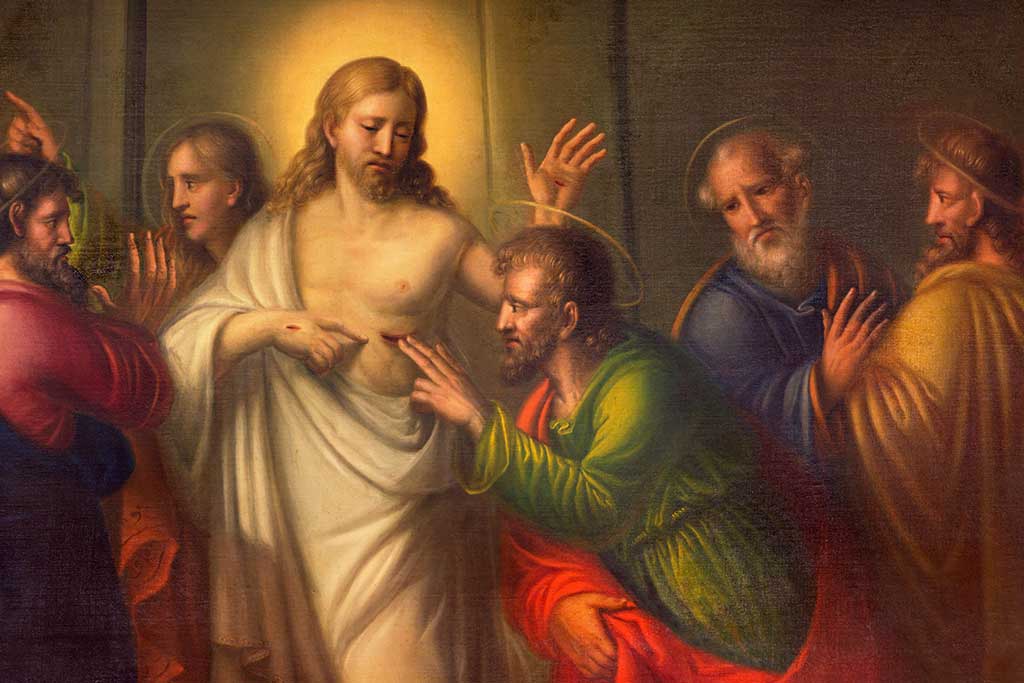
Thomas goes down in history as the epitome of doubt. I am there with Thomas. My mother was a devout Christian and my Dad was a scoffing agnostic. In my faith life, I am their son. Sometimes in conversation I hear myself make a remark and ask myself who was speaking there? I hope that I am true to both Mother and Father.
I take note of the fact that Jesus does encourage Thomas to touch his wounded body and Thomas does come to faith. There is a reprimand in Jesus’ comparison of Thomas to those who believe without examining the evidence: “Blessed are those who have not seen and have yet come to believe.”
I think Holy Week is perhaps the hardest week of the year for a person seeking evidence for faith. The hardest verse in the Bible may be spoken by Jesus: “My God, my God, why have you forsaken me?” It is harder still to come to faith in a week when interpretations of the death of Jesus include assigning God the Father with the responsibility for the death of His son. This was a point made by early feminist theologians when they spoke of Golgotha as “divine child abuse.”
I believe we can claim both the oft-called “blind believer” and the person who finds themself in church on Good Friday despite their doubt. Let us rejoice in this Easter season that we worship a God who wills to be known and who makes Godself known. Doubt can be a friend for faith, warning against over-belief in doctrines that do not praise God. I am glad for the example set by my Mother and Dad. In my own family there are certainly members who speak of wanting an “evidence-based life.” Yet they feed the hungry and visit the sick and meet Jesus’ criteria for inclusion in the Kingdom in Matthew 25. I am glad that the Jesus who makes himself known to Thomas and the Jesus who comes in peace to his fearful and questioning disciples is one and the same man. Praise be to the God who makes Godself known!