
Today’s author is Intentional Interim Pastor, Steve Sylvester.
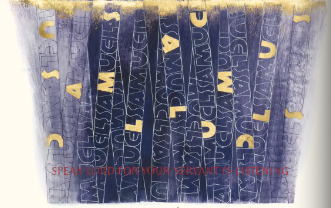
There’s just all sorts of weirdness in the long story of God and Samuel. At one point you may remember that after being pestered by friends and neighbors, Samuel went to God and said, “You are NOT going to believe what the people want! They want a KING? Can you imagine that? A KING?” God’s response was, “Yep, dumb idea, but give them what they want.” So, with both Samuel and God knowing this king business is unlikely to turn out well, Samuel anoints Saul as Israel’s first king. When—surprise, surprise!—things go off the rails, God tells Samuel that King Saul has worn out his welcome. God tells the kingmaker to go to a man named Jesse who lives in the town of Bethlehem. “One of Jesse’s sons will be king,” God says.
This is where things get even weirder. Samuel is hesitant because King Saul has become paranoid. Saul suspects everyone of turning against him, and of all people he is keeping an eye on, Samuel, God’s prophet who anoints kings, is chief among them. “I can’t do this,” Samuel tells God. “If Saul hears of it, I’m a dead man.” God’s response? “Lie. Tell Saul you’re going to Bethlehem to worship me. You’re a man of God, he’ll believe you.” Raise your hand if you find it astonishing that God is telling God’s prophet to lie.
This is an interesting story to end our theme “Invited to… obedience.” We typically, and rightly, I think, understand obedience to be about doing the right thing. In this story, however, God is saying, “We’ll get there. We’ll get to the right thing, but in order for us to get there, right now I need for you to do the wrong thing.” Left unspoken is a question: “Samuel, do you trust me?” That’s a big question. “Do you trust me? Do you trust me enough to set aside what you believe to be right and wrong in order to follow my lead?”
For the last four weeks I have largely encouraged us to set aside our understanding of the word “obedience.” There comes a time, though, when the word means exactly what we think it means, and we are simply called to obey, regardless of whether we understand or agree with what we are asked to do. In Shusaku Endo’s novel “Silence,” a missionary priest in Japan is told the villagers to whom he ministers will be killed unless he tramples upon an image of Jesus that is laid at his feet. To trample on the image would be so very wrong. It would mean to betray his vows, something he simply cannot do. As he struggles with what he knows he must not do, the image comes to life before him and Jesus says, “Trample! It was to be trampled on by men that I was born into this world.” Wrong as it seems, the priest throws himself on trust and he obeys. He tramples on the face of his Lord.
That is where I will leave us today with this theme. In the end, obedience is a denial of self. It is not craven self-abnegation, but radical trust. It is the acceptance that God knows more than we do, and even if we are asked to do something that seems repugnant or wrong, we are called to obey.