
Today’s author is Intentional Interim Pastor, Steve Sylvester.
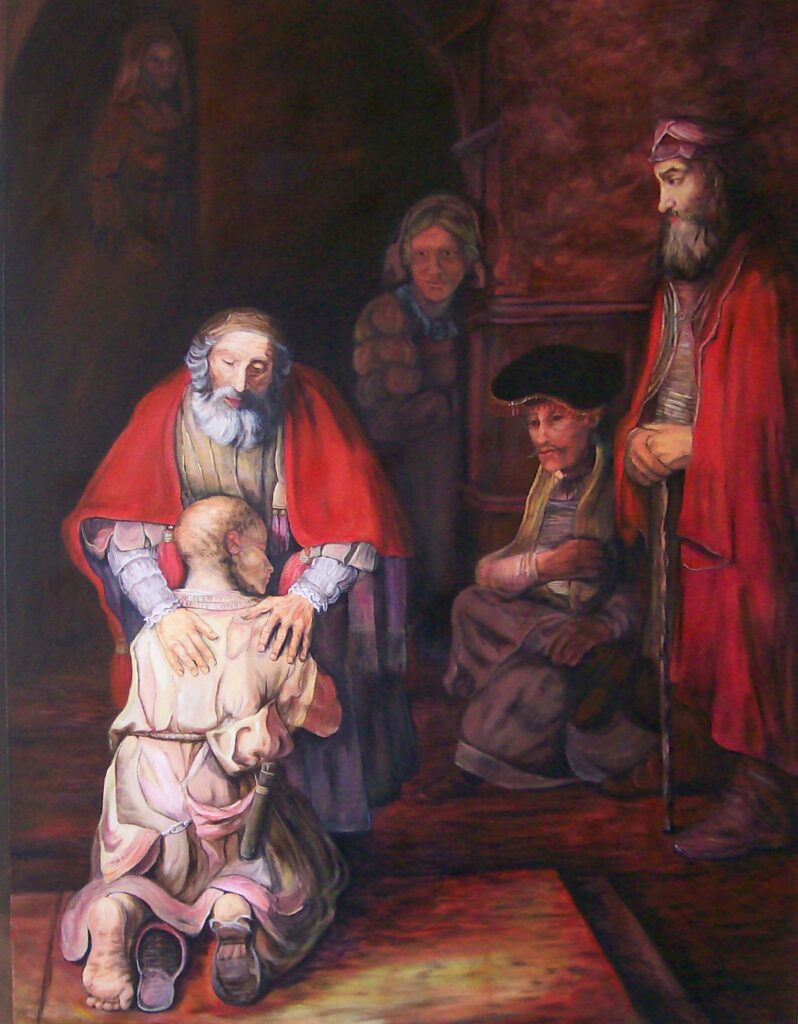
This past Sunday we concluded our Summer series: Be still and know that I am God. So, why are we to be still? In order to listen and hear what God is saying to us. When the Big Idea Team chose this theme and chose stories for the series, we were talking about the need to listen in order to understand what God was telling us to do. As we thought through Scripture stories to include, Steve Sveom encouraged us to choose a story that would have us listen not just for marching orders, but for the gospel. Paraphrasing, he said, “We need to know not just what God wants us to ‘do.’ We need to know that we are freed and loved.” Yes.
The Parable of the Prodigal Son is the story that we chose for this, and it’s perfect. The younger son in the story, the prodigal, begged to be treated “as a hired hand.” The elder son tried to ingratiate himself with his father by stating that all his life he had “worked like a slave” for his father. They each saw the father as their task master. What the father wanted, however, was a relationship with his children, and he wanted his children to be in relationship with each other.
In our Bible study on this story the Tuesday before concluding our summer series, we talked about the disconnect between the children who saw themselves as slaves to be put to work and the father who saw them as children to be loved. We also talked about the odd “title” we use for this parable, because the central character in this story is the foolishly gracious parent.
There is a reason we need to listen to God in order to receive “marching orders.” It’s because we don’t deeply understand or believe who we are. If we did, we would “behave” accordingly. If the sons in the parable had truly understood and believed in their parent’s love for them, they would have lived out of that love, and part of living out of that love would have meant embracing one another as siblings, something they completely fail to do in the story. When we are still enough to listen for and hear the gospel of grace, that we are freed and loved because of who God is as opposed to what we do, we will live differently. We will DO what we ARE.
Alisdair Macintyre is a contemporary moral philosopher who prioritizes virtue and character over rules or consequences. Macintyre’s “Virtue Ethics” calls for a deep exploration of how our moral identities are shaped by the stories we tell and the communities we inhabit. In other words, as we are shaped, so will we behave. We will DO what we ARE.
The gospel story of God’s grace in Christ Jesus, and the community gathered around it, frees us from our transactional relationships with God and one another. It frees us from rules and codes and behavioral systems. It frees us to BE and DO who we ARE.