Advent Devotions
All are invited as we Make Room this Advent season.
Signs
Today’s author is Prince of Peace’s Intentional Interim, Pr. Steve Sylvester.

“What’s your sign?” she asked in a breathy early-detective-novel voice. He raised an eyebrow, tipped his glass toward her and said, “I turn water into wine.”
St. John’s Jesus doesn’t do miracles. He does signs, the first of which was to turn water into wine at a wedding feast in the city of Cana. In fact, while the other three Gospels feel at least somewhat like historical reportage (they’re not that, though), the stories in John’s Gospel are transparently arranged to show Jesus’ signs to greatest effect. John even tells us this at the end of his story: “Jesus did many other signs in the presence of his disciples that are not written in this book. But these are written so that you may continue to believe that Jesus is the Messiah, the Son of God, and that through believing you may have life in his name.” [John 20:30-31]
An interesting thing to note is that the above translation from the New Revised Standard Version Updated Edition (try saying that quickly five times) differs from our accustomed NRSV translation. The NRSV says the signs are what allow us to “come to believe,” whereas the NRSVUE says they allow us to “continue to believe.” The difference is only one word, but it’s not a niggle. As I said in a sermon a few weeks ago, Jesus is constantly evangelizing us, he’s always inviting us to believe. Why? Because “the world” (a concept in John’s Gospel that is in opposition to the reign of God) doesn’t care whether we have already “come to believe.” It is constantly encouraging unbelief and despair.
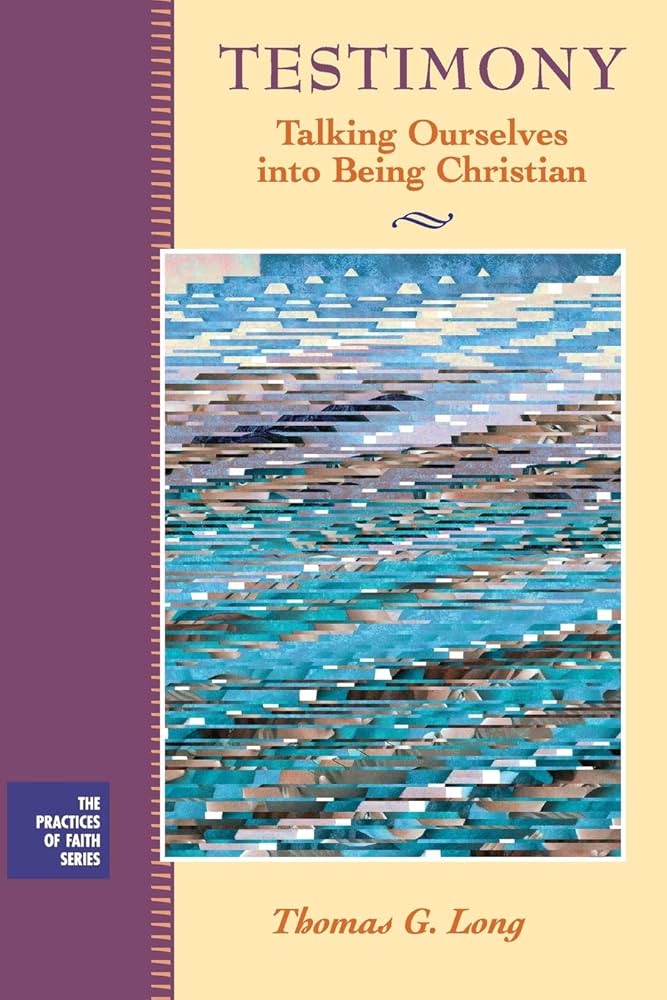
In his book, “Testimony: Talking Ourselves into Being Christian,” Thomas Long makes the point that belief is not something we come to. Rather, it is something we help each other continue in. It is reminiscent of Luther’s statement that “the old [sinful] man in [him] is such a strong swimmer, that he must be daily drowned in the waters of baptism.”
Signs are not just for telling us what’s coming on a yet untraveled road. Signs are also for reminding us not to drop our focus. After all, it is precisely our familiarity with a road that finds us thoughtlessly pushing 50 when the speed limit is 35. Signs call us back to the present. They alert us to realities we no longer see, but that are there, nonetheless. As we work our way through John’s Gospel, may Jesus’ signs help you continue to believe.
Previously…
More than a Meeting
In the life of faith, the Church emerges as the living embodiment of the “Body of Christ,” a means through which God’s transformative vision is breathed into existence. Each member, a unique thread, intricately woven into the fabric of communal existence, contributes to the vibrant expression of divine purpose. This Sunday, this body will be re-membered to tend to itself for the sake of the world.
What kind of soil am I, today?
In Mark 4: 1-34 the writer tells of Jesus’s parable of the Sower and the explanation of that parable Jesus gave to his disciples. There’s also the parable of the mustard seed and Jesus’s admonitions and advice for living in the faith. In other words, there’s a lot to think about in this passage, which is my typical reaction to virtually any passage of scripture.
Liberating the Structures
In the life of faith, our understanding of God’s vision evolves with the rhythm of time. Just as ancient wisdom guided our forebears through shifting landscapes, we, too, are called to adapt our structures to the ever-changing contours of the world. Our council is proposing just such an adaption with the updates to our constitution and bylaws to be considered at next Sunday’s semi-annual meeting.
Sowing Seeds of Grace
The teachings of Jesus are like radiant threads in the fabric of understanding, and the parables stand out as profound narratives weaving transformative truths into the tapestry of our lives. Take, for instance, the “Parable of the Sower” from Mark 4 which we’ll hear on Sunday, a story of seeds sown on different soils. This narrative unfolds as a tale of hope and challenge, inviting us to examine the conditions of our own hearts.