Today’s author is Prince of Peace member Steve Sveom.
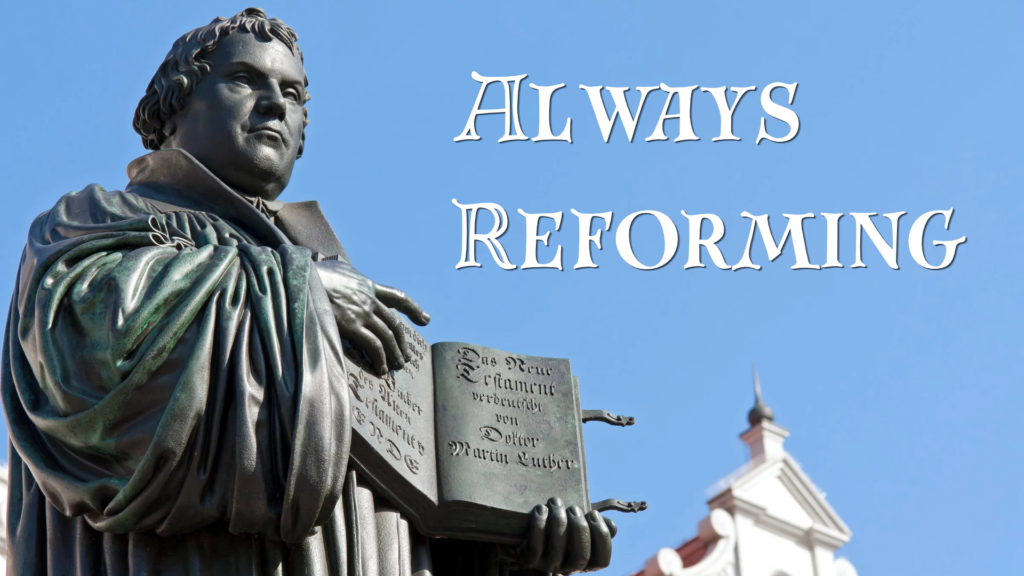
The past Sunday, we were blessed to have Dr. Mary Jane Haemig as our forum presenter. She shared about “How Martin Luther helped ordinary people understand their faith.” It was interesting to hear that the German literacy rate, at the time of Luther, was only about 5%. One result of that, however, was that it wasn’t embarrassing to be illiterate and that society used different means to communicate. Those able to read might read something to someone unable to read. So, Luther’s ability to use language in ways that could be understood was a great asset.
Luther used pamphlets and materials that would be accessible to as many people as possible. Many of us are familiar with the Small Catechism. Dr. Haemig noted that it is a relevant tool because it does not simply reiterate a list of “don’ts” and rules but turns our attention to steps we can take to live faithfully as God’s people. I certainly appreciate Luther’s explanation of the commandment “You shall not bear false witness against your neighbor.” He directs us beyond “don’t commit perjury against another” to calling us to defend our neighbor, speak well of our neighbor, and explain our actions in the kindest way. We could all learn something from that.
Another practice of Luther was to recognize the power of hymns. Music could be used to teach and proclaim the word.
We need ongoing reformation. To be re-formed by the word of God’s grace. We are blessed to live in a much more literate environment. But some of the tools of Luther’s day are incredibly valuable today. Music can help to shape and form our faith; preaching and teaching is vital beyond a written page; devotional writings or podcasts can be helpful. Thank God, for the opportunities we have to shape our life of faith.
Prayer: God of reformation: shape us and mold us so that our faith is attuned to your love and that our actions live out our faith. Amen.