Today’s author is Debbie Jorgens.
In the 4th chapter of Revelation, we read of John’s vision of the heavenly throne room. Day and night, the four living creatures sing praises to the Lord God Almighty who sits on the throne and the twenty-four elders, falling down before the Lord, join in the celestial song. But now, as we enter chapter 5, John notices something else: a scroll in God’s right hand! John makes two immediate observations: (1) the scroll has writing on both the inside and on the back; and (2) it is sealed with seven seals. Why is this significant?
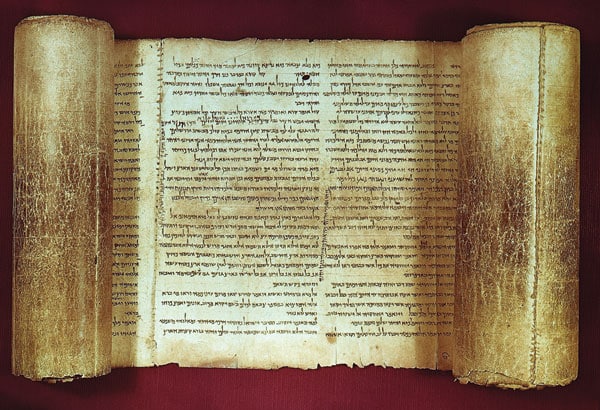
In those times, the strips of papyrus that were used for scrolls caused a horizontal grain on one side and a vertical grain on the other. Usually, scrolls were written only on the side with horizontal grain because that provided easier writing while longer writings utilized both sides. The fact that the scroll here had been written “on the back” implies that the communication was extensive.[1]
The seven seals indicate that the scroll’s contents are valid – like the seals that were placed on royal decrees, wills, and other official documents. In his book, Revelation & the End of All Things, Craig Koester explains: “A seal in John’s time consisted of a piece of wax or damp clay that was placed on the edge of the scroll and imprinted with the ring of the person who sent the text. The seal ensured that the scroll truly declared the will of its author and that no one had altered the text. Only a person who had been properly authorized was to break the seals and open the scroll” (80).
And this is precisely the question raised by the mighty angel: “Who is worthy to open the scroll and break its seals?” (Rev. 5:2) As it turns out, no one can be found in heaven, on earth, or even under the earth who qualifies as worthy. “This again underscores the differences between creatures and their Creator,” Koester writes. “All creatures prove to be inadequate for the carrying out of God’s purposes. When the question is asked, ‘Who is worthy?’ the response at this point is simply, ‘no one’” ( 81).
But John’s vision doesn’t end there. One of the elders tells him there is One who is worthy: “the Lion of the tribe of Judah” (a metaphor for the King or Messiah). John turns, expecting to see the the Lion. Instead, John beholds a Lamb that, though slaughtered, is still standing.
“In this single, vivid image of the Lamb, John brings together multiple dimensions of meaning: vulnerability, sacrificial death, and deliverance….By juxtaposing the images of a Lion and a Lamb, John portrays the suffering and death of Jesus as an act of power – the power of redemptive self-giving, which accomplishes God’s purposes” (Koester, 82).
We are not worthy. But Christ, the Lamb of God, is. And by his death, he has opened the way for us – and for people of every tribe and language and nation – to be brought into life-giving relationship with God.
Worthy is Christ, the Lamb who was slain,
(The canticle of praise from our liturgy, ELW p 149)
Whose blood set us free to be people of God.
Power and riches and wisdom and strength,
And honor and blessing and glory are his.
[1] Coffman, James Burton, “Commentary on Revelation 5.”