
Advent Devotions
All are invited as we Make Room this Advent season.
Story of deliverance
Today’s author is Prince of Peace member Steve Sveom.
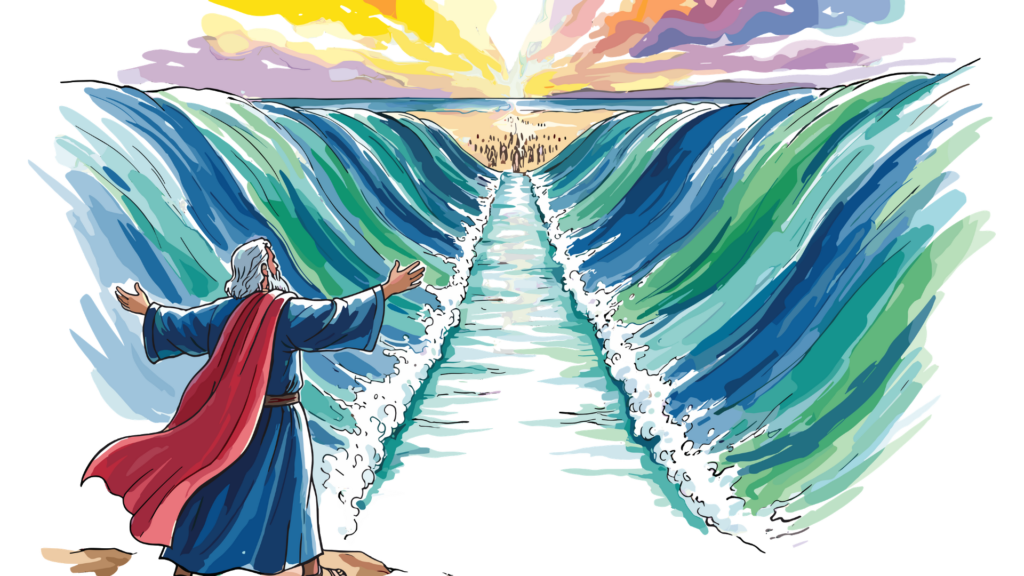
The Exodus story is the core event in the biblical story of Israel. Within the story there are many notable messages that the authors convey.
The story of Moses reveals someone who is reluctant but ultimately becomes the instrument for God’s work. He is the one who stands before Pharoah who is the opposition. God’s work is to bring freedom and to form the people of Israel into a nation meant to fulfill the promises of God to Abraham (they will be many and will have a land so that they will be blessed to be a blessing). The plagues, that led to Pharoah finally letting Israel go, are direct attacks on the gods of the Egyptians and meant to demonstrate God’s superiority. Exodus 14 recounts the people of Israel departing Egypt and pictures them trapped between the Red Sea in front and the powerful Egyptian army, sent by Pharoah after he changed his mind, pursuing from behind. The Red Sea would become the ultimate deliverance from slavery and death for the Israelites.
The story of deliverance has resonated over the centuries and is recounted in the Psalms and other writings of the Israelites. It marks the annual celebration of the Passover. It was an important story for the people captive in Babylon. Under Roman domination, it was an important commemoration at the time of Jesus, which he used to describe his work, in the Last Supper (“this is my body, given for you”; “this is my blood of the new covenant, shed for you and for all people for the forgiveness of sins.”) It became a rallying story for slaves who longed for freedom in the United States. Many spirituals that provided guidance along the Underground Railroad and that inspired worship in African American churches use imagery from the Exodus story.
Today, the story can once again speak truth to power in opposition to authoritarianism. It can be a story of hope for immigrant people who have hopes and dreams being threatened. How will it all play out today? In the reading from Exodus 14, Moses tells the people “Do not be afraid, stand firm, and see the deliverance that the LORD will accomplish for you today…you have only to keep still.” There is an element of trust and faith in the work of God. But there is something else present in the story. God says to Moses “Why do you cry out to me? Tell the Israelites to go forward.” There is a call to faith, but also a call to action. Go forward into the unknown. God is present and God provides. It is a message for us. Keep going. Press on. The love of God is real.
Prayer: God of grace, thank you for your faithfulness. We trust in your love. Guide us as we keep going into the unknown so that we will pursue your love in our words and actions. Amen.
Previously…
God is near
Today's author is Prince of Peace's Intentional Interim, Pr. Steve Sylvester. “One of the scribes came near and heard [Jesus and the Pharisees and Sadducees] disputing with one another…” Mark 12:28 There’s a refrain from a song of a few decades ago that has the...
Friends
Today's author is Prince of Peace member Fred Ogimachi. Today’s assignment was John 15:1-17. A section in John’s Gospel where he is recounting those final intimate details of Jesus with His disciples during the time between the upper room and the garden recorded...
Be a blessing
Today's author is Prince of Peace member Fred Ogimachi. I have three grandchildren. Two granddaughters and one grandson ages 7, 5, and 3. They are my delight! I think of them often and pray for them each day. One of the things that I do when I am with them,...
Reshaped
Today's author is Prince of Peace's Intentional Interim, Pr. Steve Sylvester. “I am the true vine, and my Father is the gardener. He cuts off every branch in me that bears no fruit, while every branch that does bear fruit he prunes so that it will be even more...